

NASA Earth Observatory / Joshua Stevens, using Suomi NPP VIIRS data
The Rules Are Being Rewritten
You are constantly using technology that derives from space, and you don’t even realize it. The laws governing that technology, who controls it, who profits from it, and who pays for it, are being discussed right now.
Space is closer to you than it has ever been, and the law that governs it is further away than at any point since the moon landing. This Analysis discusses that gap. The advent of space tech is found in nearly every sector. It is working for you even if you do not realize it.
That weather forecast that you checked told you whether or not to bring an umbrella? That came from satellites monitoring storm systems throughout the oceans. The GPS that guided your commute? A constellation of U.S. military-operated satellites constantly transmitting precise signals to your phone. The text message that you sent? Transmitted through satellite relays.
This is all to say that space is no longer a distant frontier that only affects astronauts and rocket launches. It now affects civilization as a whole, roads, electrical grids, water systems, etc. The difference is that most people do not know it exists, and almost no one understands who governs it. That is quickly changing; the legal and policy battles being fought right now over space governance will affect individuals’ lives for the foreseeable future.
How Big Is This, Really?
The global space economy is projected to exceed $1.8 trillion by 2035. Private corporations, rather than government agencies, primarily drive that growth. These companies are launching commercial satellites, building internet networks, developing launch vehicles, and beginning to plan for in-space manufacturing and lunar resource extraction. This is an economy, and like all economies, they need rules.
The commercial launch industry is perhaps the most visible part of the Space Sector, and it is one aspect that we are most excited about. Companies like SpaceX have reduced the cost of launching payloads into space by roughly 90% over the past decade. As launch costs fall, more companies can afford to invest in sending items into space. More items in space means more economic value, more competition, and more complexity for regulators trying to keep up.
The Regulatory Gap No One Is Talking About
In the United States, regulatory authority over commercial space is primarily split among three agencies: the Federal Aviation Administration (FAA), the Federal Communications Commission (FCC), and the Department of Commerce. The FAA regulates launches and reentries, the FCC handles satellite and spectrum licensing, and the Department of Commerce manages space activities that do not fit neatly into either category. Since space is extremely vast, there is no single agency with comprehensive authority, no clear process for activities, and no international consensus on who owns what in space.
The FAA has a new Part 450 rule, which consolidates performance-based frameworks for launch and reentry. This became mandatory for all licensees in March 2026. Many developers and operators were not ready and needed to adapt quickly. The FCC is beginning to modernize its satellite licensing process through what it terms a “licensing assembly line,” aiming to process applications at the speed and scale the new space economy demands.
Internet From Space
Of all the technologies in space, the one affecting people the most right now is satellite internet.
Starlink, SpaceX’s low Earth orbit broadband network, has changed what is possible for rural and remote communities around the globe. By 2025, Starlink had removed its waitlist in the United States, offering broadband-class internet to communities that fiber has never been able to reach and may never reach because of the difficulty of laying cables across low-density terrain.
The scale of that network is completely unprecedented. By February 2026, Starlink had surpassed 10 million global subscribers, with SpaceX claiming it would receive an average of 52,000 new users per day for the rest of the year. The Starlink constellation exceeds 10,000 satellites, making it the largest ever built. It’s a direct-to-cell service that runs on more than 660 satellites and can deliver text and data to ordinary smartphones in places without cellular coverage.
The scale of growth has been so intense that the Trump administration redirected $42.5 billion in the federal Broadband Equity, Access and Deployment (BEAD) program, shifting away from a fiber-first approach towards technology-neutral rules which would allow satellite providers to compete for funds. For families who finally have internet access thanks to Starlink, the advantages are clear. For the communities that rely on fiber, it looks different. The legal frameworks governing that choice are being written right now.
The Need For Rules
The most critical step in the space race in the coming years will be a discussion of an international framework for governance and privatization laws.
The current legal frameworks governing space were largely written in the 1960s and 1970s, during the Cold War, when only superpowers could reach orbit. The idea of private companies operating in space was a fantasy. The 1967 Outer Space Treaty, still the foundational document of international space law, was negotiated before humans even reached the moon. It prohibits any form of national appropriation of outer space but says little about private property rights, resource extraction, or liability for debris.
The closest thing to filling this gap is the Artemis Accords, a set of bilateral agreements between the United States and more than fifty nations. The Accords establish norms for behavior in space: peaceful exploration, transparency, interoperability, and debris mitigation. These norms are expected to influence any international framework for the governance of space. Notably, both Russia and China have refused to sign the accords. These accords are not legally binding treaties. Meaning that while the accords are a good start, they do not bind any countries that might violate them. They are not enforceable in court and can cause a dangerous sense of accomplishment, without actually solving any issues.
One of the most important issues developing concerns the responsibility gap between countries and corporations if something happens as a result of their actions in space. An example involves space debris: as of early 2026, there are more than 40,000 tracked objects in orbit around Earth, and hundreds of millions of smaller fragments that can’t be tracked. Every new launch increases the probability of a collision with debris, and each collision generates more debris, leading to an even greater chance of collision. This cycle is incredibly dangerous and can have immense consequences. The existing legal framework does not offer any adequate solution. There is no mandate for debris removal or regulation of satellite constellations. The focus of these frameworks deals with nations, not corporations.
The need for rules continues to grow, and the longer we wait to write them, the more likely we are to be unable to reverse any negative outcomes.
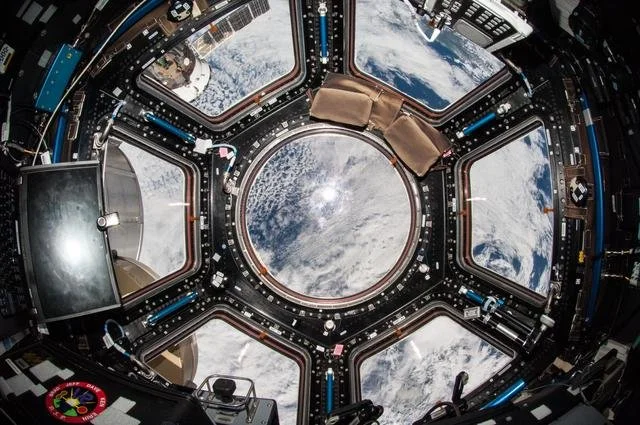
The Bigger Picture
There is something exciting happening in space right now. For the first time in human history, the cosmos is becoming more economically accessible to private corporations, smaller nations, and eventually ordinary people. The history of frontier exploration teaches an important and consistent lesson: the rules set at the beginning will shape everything that follows. The legal frameworks being established for space now will determine the kinds of benefits this new sector can provide.
Key Insights
That was a lot, and there is a lot more to come. If you forget everything else from these analyses, keep these in mind:
Space technology is already here and helping run essential daily tasks (weather, GPS, communications, etc.), but the current laws are inadequate.
The global space economy is projected to exceed $1.8 trillion by 2035 and is dominated by private corporations instead of governments.
The Artemis Accords are the first steps towards creating a governance framework for space. They are not enforceable in court, leaving a critical gap in responsibility for both corporations and nations alike. Also, keep in mind that Russia and China have not signed these accords.
The longer we wait to create an enforceable framework, the closer we come to outcomes that we will not be able to reverse.
